
Denver to Vail: Drive Time, Winter Road Rules and Shuttle Options
Getting from Denver to Vail looks simple on a map: it’s about 100 miles west on Interstate 70. But anyone who has driven it on a snowy Saturday knows the trip can take twice as long as it should. This guide covers how long the drive really takes, Colorado’s winter traction law, the best times to go, and how to get there without a car.
Planning more outings? See our full list of day trips from Denver.
Table of Contents
Quick facts
| Route | I-70 West the whole way |
| Distance | About 100 miles |
| Normal drive time | About 1 hour 45 minutes to 2 hours |
| Busy ski weekends | 2.5 to 4 hours is common |
| Highest point | Eisenhower-Johnson Memorial Tunnel (about 11,000 feet) |
| Mountain pass | Vail Pass, just before Vail |
| Winter rule | Traction law, Sept. 1 to May 31 |
How long is the drive from Denver to Vail?
With clear roads and light traffic, plan on about 2 hours from downtown Denver. From Denver International Airport, add roughly 30 to 45 minutes. Epic Mountain Express, a shuttle company, quotes about 2.5 hours from the airport to Vail in normal conditions.
Two things slow the drive down:
- Weekend ski traffic. Westbound I-70 is busiest on Friday evenings and Saturday mornings. Eastbound traffic back to Denver is heaviest on Sunday afternoons.
- Snow. Storms can slow traffic to a crawl and sometimes close the tunnel or Vail Pass for a while.
Best times to drive
- Westbound: leave before 6 am on Saturday, or go midweek.
- Eastbound: leave Vail before noon on Sunday, or wait until after 7 pm.
- Check COtrip.org (or the COtrip app) for road conditions, closures and travel times before you leave.
The route, step by step
- Denver to the foothills. I-70 climbs quickly past Morrison and Idaho Springs.
- Eisenhower-Johnson Memorial Tunnel. The tunnel goes under the Continental Divide at about 11,000 feet, one of the highest points on the US interstate system. Trucks carrying hazardous materials must go over Loveland Pass instead.
- Summit County. You pass Dillon, Silverthorne and Frisco. It’s a good place for coffee and a restroom. (Staying here? See our guide to hot springs near Dillon.)
- Vail Pass. A long climb and descent, often the snowiest part of the drive. Go slowly and leave plenty of space.
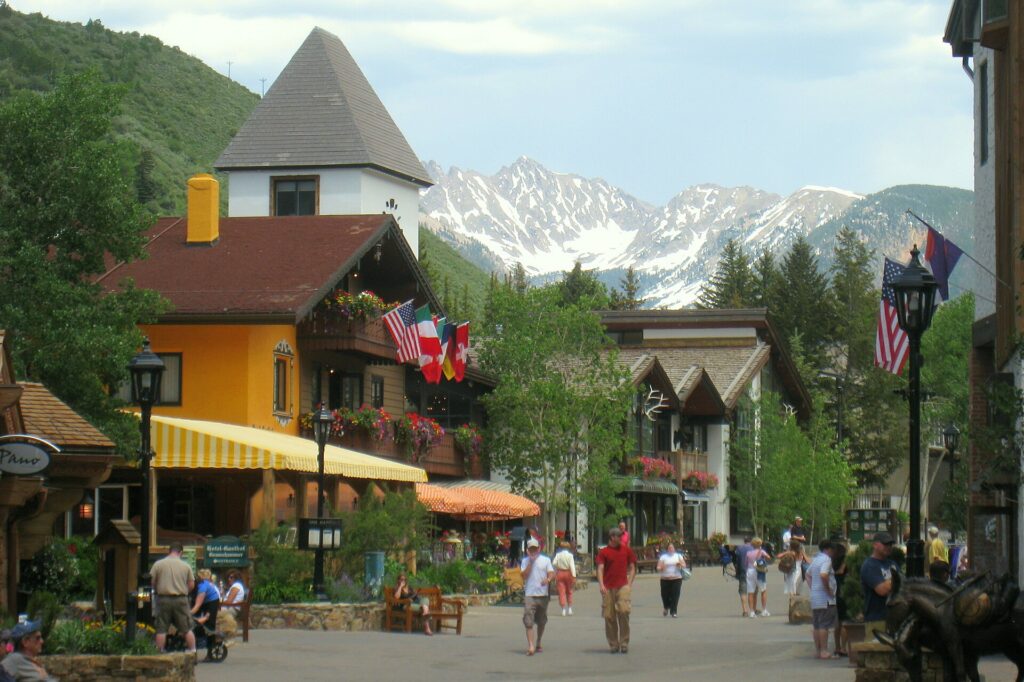
- Vail. Exits for East Vail, Vail Village and West Vail.
Colorado’s traction law (important in winter)
From September 1 to May 31, the Colorado Department of Transportation (CDOT) can enforce a traction law on I-70 between Morrison and Dotsero. Vail is on that stretch.
When the traction law is in effect, CDOT says passenger vehicles need one of these:
- Tires with at least 3/16 inch of tread that are rated all-weather or winter (look for the mountain-snowflake symbol or M+S), or
- Chains or an approved alternative traction device, such as AutoSock.
CDOT strongly recommends 4WD or AWD in the mountains, but the tread rule still applies. When the stricter chain law is in effect, every vehicle must have chains or an approved alternative device.
Fines: CDOT lists a $100 fine plus a $33 surcharge for breaking the law, or $500 plus a $157 surcharge if your vehicle blocks a travel lane.
Renting a car? Ask for a vehicle with AWD or 4WD and good all-weather or snow tires. Rental cars are not exempt.
Getting to Vail without a car
Airport shuttles
Epic Mountain Express runs shared and private shuttles from Denver International Airport to Vail, Beaver Creek and other resorts. The company says the trip takes about 2.5 hours in normal conditions. Fares depend on the season and whether you share the ride. Epic Pass holders get a discount. Book ahead in ski season.
Bustang (state bus)
CDOT’s Bustang buses run along the I-70 corridor west of Denver. Tickets can be bought on the Bustang mobile app, or on board with exact change. Routes and stops change by season, so check ridebustang.com for the current schedule and the stop closest to where you’re staying.
Do you need a car in Vail?
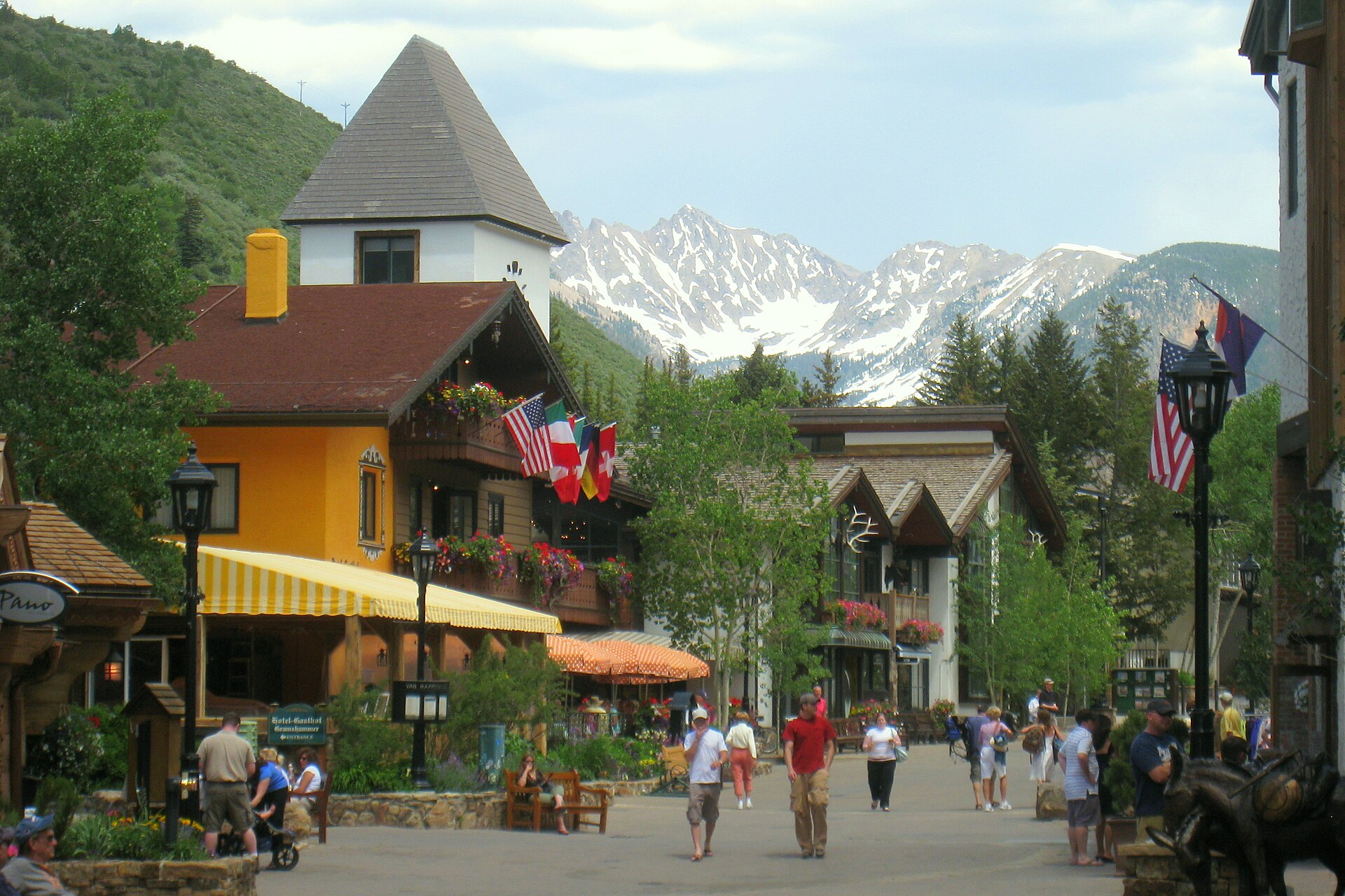
Not really. Vail runs free town buses between the villages, and most of the town is walkable. A car helps if you want to visit other towns, like Glenwood Springs, during your trip.
Worth a stop on the way
- Idaho Springs: a historic mining town with good food right off the interstate.
- Georgetown: Victorian streets, and a famous Christmas market in December. See our Georgetown Christmas Market guide.
- Frisco: a cute Main Street and lake views in Summit County.
When you get there
Our guide to things to do in Vail covers the gondola, the villages and what to do if you don’t ski. Heading further west? Glenwood Springs in winter is about an hour beyond Vail on I-70. And remember that the “back way” to Aspen over Independence Pass closes every winter.
FAQ
How far is Vail from Denver?
About 100 miles west on I-70. That’s roughly 2 hours of driving in good conditions.
How long does it take to get from Denver airport to Vail?
About 2.5 hours in normal conditions, according to Epic Mountain Express. Snow and weekend traffic can add an hour or more.
Do I need snow tires to drive to Vail?
When the traction law is in effect, you need all-weather or winter tires with at least 3/16-inch tread, or chains or an approved traction device. CDOT recommends AWD or 4WD.
What is the best day to drive from Denver to Vail?
Midweek is easiest. On weekends, leave very early on Saturday and come back before noon on Sunday to avoid the worst traffic.
Can I get to Vail without a car?
Yes. Airport shuttles run from Denver International Airport, and CDOT’s Bustang buses serve the I-70 mountain corridor. Vail has free town buses once you arrive.