
Colorado National Parks in Winter: What’s Open and What to Do
Colorado’s national parks don’t shut down when the snow comes. They get quieter, the crowds disappear, and the scenery gets even better. But roads close, campgrounds shut, and visitor centers keep shorter hours. Here’s what you need to know about visiting Colorado’s national parks in winter.
At a glance
| Park | Open in winter? | Vehicle fee | What closes |
|---|---|---|---|
| Rocky Mountain | Yes | $30 (1 day) / $35 (7 days) | Trail Ridge Road through the park, Old Fall River Road |
| Great Sand Dunes | Yes, 24/7 | $25 (7 days) | Piñon Flats Campground, Medano Pass Road |
| Black Canyon of the Gunnison | South Rim only | $30 (7 days) | North Rim road, most of the South Rim Road |
Tip: if you’ll visit two or more parks this year, the America the Beautiful pass ($80) covers all of them. Nov. 11 (Veterans Day) is a fee-free day at national parks.
Rocky Mountain National Park
Open in winter: yes. Best winter base: Estes Park.
- Trail Ridge Road closes to through travel for the winter. On Nov. 10, 2026, it was closed at Many Parks Curve (east) and the Colorado River Trailhead (west).
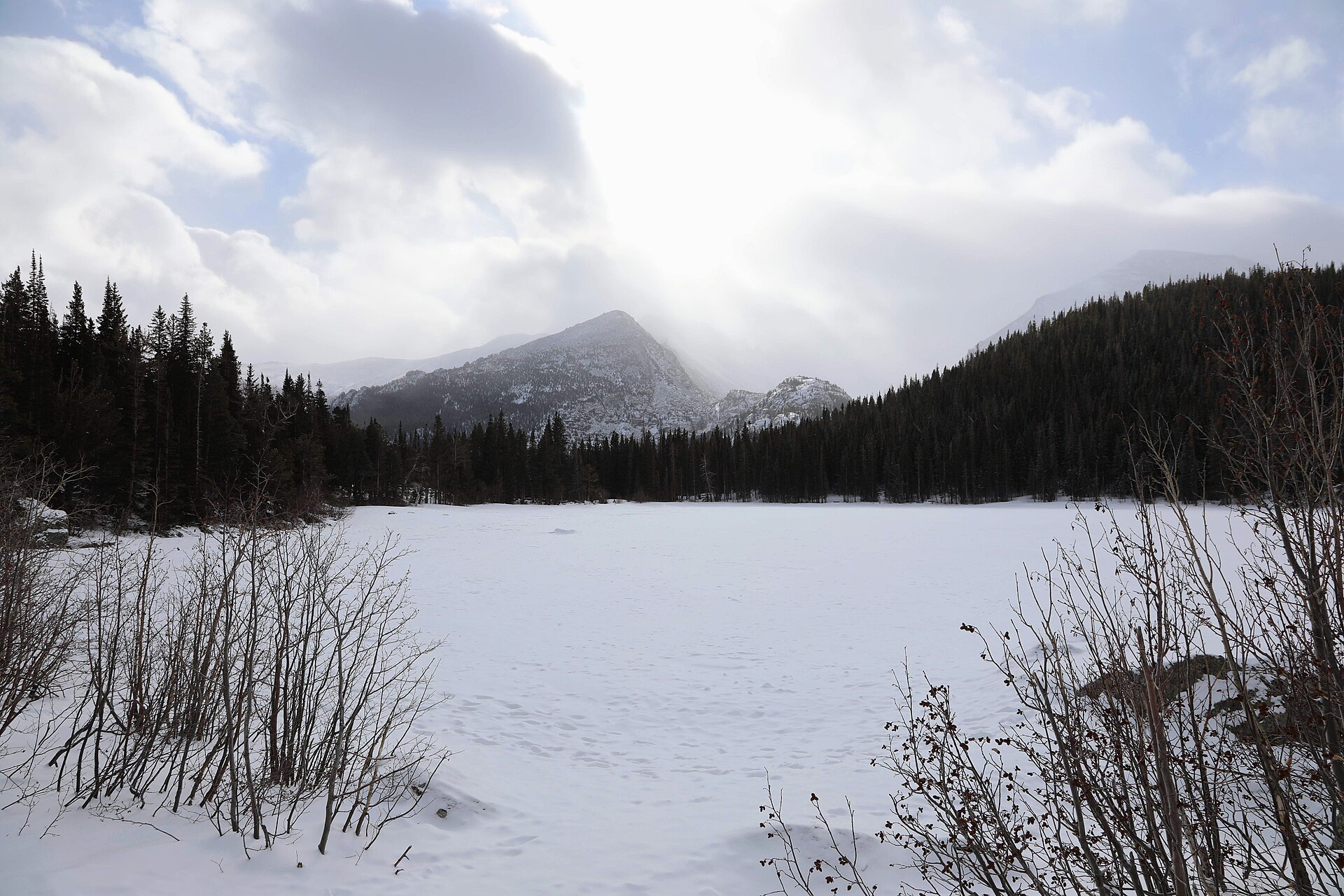
- Bear Lake Road stays open year-round, so you can reach Bear Lake at 9,475 feet for snowshoeing.
- No timed entry is needed in winter. In 2026, it ran from May 22 to Oct. 12.
- The park is card only. Non-US residents age 16+ pay an extra $100 per person unless they have an annual pass.
- Which town to stay in? See Grand Lake vs Estes Park.
Great Sand Dunes National Park
Open in winter: yes, 24 hours a day. Best winter base: Alamosa or the San Luis Valley.
- Snow on the tallest dunes in North America is a beautiful sight, and you’ll often have them almost to yourself.
- Sledding works on very wet sand after snow. Otherwise, rent a sandboard or sand sled in the valley.
- Piñon Flats Campground is closed from November to March, and the visitor center is open daily from 9 am to 4:30 pm.
- Full guide: Great Sand Dunes in winter.
Black Canyon of the Gunnison National Park
Open in winter: South Rim only. Best winter base: Montrose.
- The South Rim Road is open to Gunnison Point (the visitor center) in winter. Beyond that, it becomes a cross-country ski and snowshoe route.
- The North Rim road closes from about mid-November to May.
- The park is cashless.
- Full guide: Black Canyon South Rim vs North Rim.
Mesa Verde National Park
Colorado’s fourth national park, Mesa Verde, is in the far southwest corner of the state. It’s open year-round, but winter brings limited tours and services. Check the National Park Service website before you go. Learn more about ancient sites in our guide to Colorado archaeological areas.
Winter tips for Colorado’s national parks
- Check road status the same morning. Conditions change fast. For Rocky Mountain, call 970-586-1222.
- Colorado’s traction law can be in effect from Sept. 1 to May 31. You need good tires or chains.
- Bring a card. Several parks no longer accept cash.
- Pack for altitude and cold: layers, water, sunglasses and sunscreen.
- Days are short. Plan to be off trails before dark.
- Visitor centers keep shorter hours and close on some holidays.
More winter trips
- Colorado in winter: the complete guide
- Colorado ski resort opening dates
- Closest hot springs to Denver
FAQ
Are Colorado’s national parks open in winter?
Yes. Rocky Mountain, Great Sand Dunes, Black Canyon of the Gunnison (South Rim) and Mesa Verde are all open in winter, but some roads, campgrounds and services close.
Is Trail Ridge Road open in winter?
No. Trail Ridge Road closes to through travel in winter. Bear Lake Road stays open year-round.
Do you need a reservation for Rocky Mountain National Park in winter?
No. Timed entry only applies in summer and early fall (May 22 to Oct. 12 in 2026).
Which Colorado national park is best in winter?
Rocky Mountain is the easiest from Denver, with snowshoeing at Bear Lake. Great Sand Dunes is the most unusual, with snow on giant sand dunes.
Is there one pass for all Colorado national parks?
Yes. The America the Beautiful pass ($80 a year) covers entrance to all national parks.
Featured photo: Jonathan Wisner / Wikimedia Commons (CC BY 2.0)