
Great Sand Dunes in Winter: Sledding, Fees and Tips
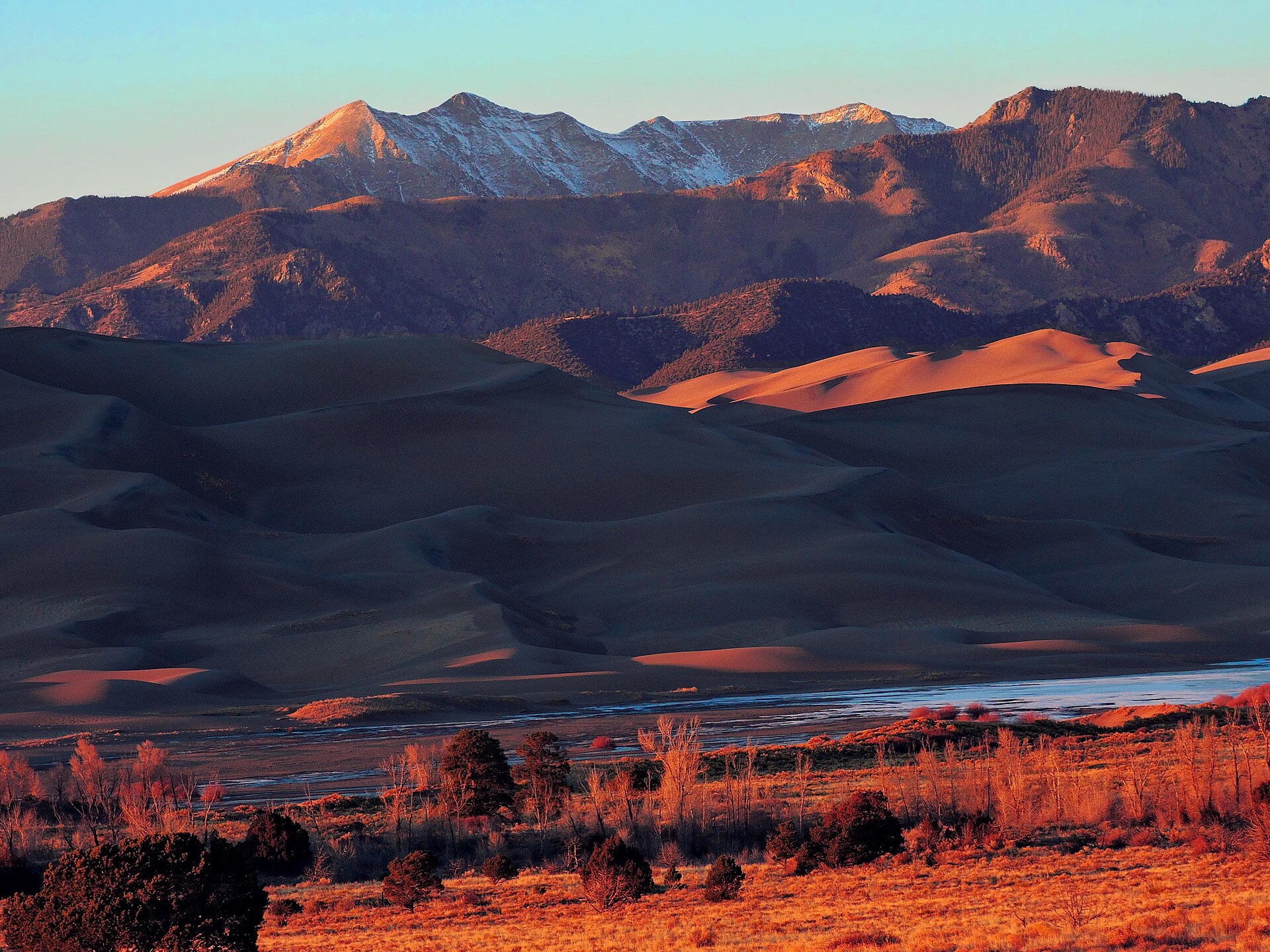
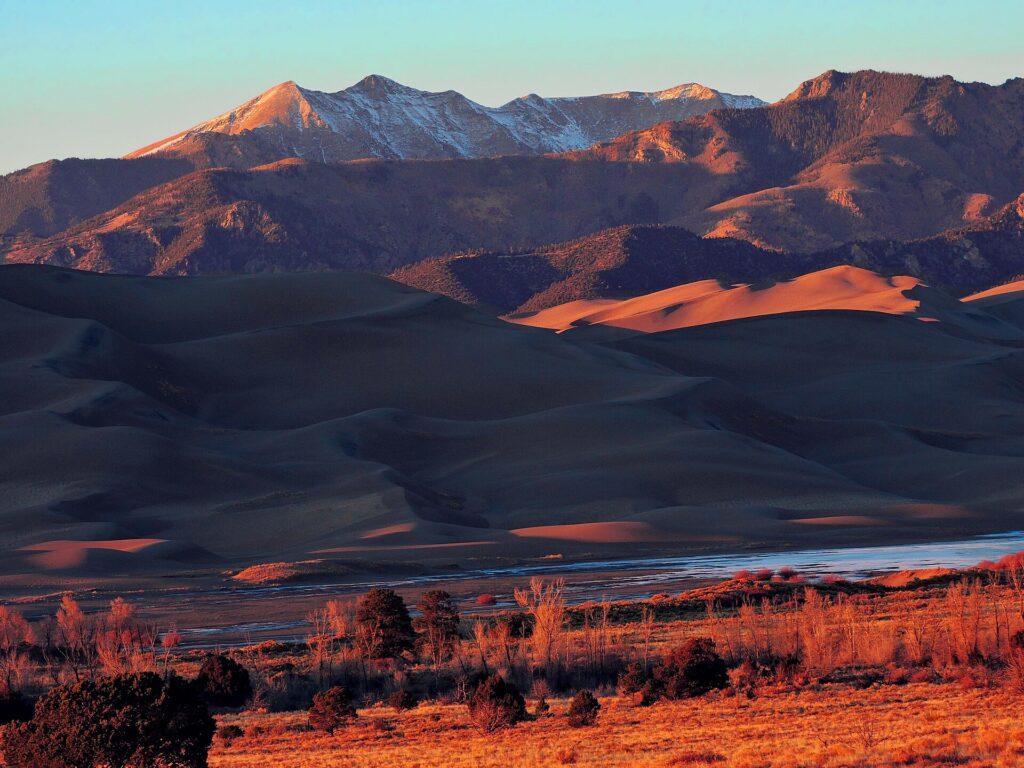
Most people visit Great Sand Dunes National Park in summer, when Medano Creek flows and the sand gets hot enough to burn your feet. But a Great Sand Dunes National Park winter visit is quiet, cold and beautiful. Snow on the tallest dunes in North America, with the Sangre de Cristo Mountains behind them, is one of Colorado’s great winter sights.
Great Sand Dunes in Winter: Sledding, Fees and Tips
Table of Contents
Quick facts
| Open | 24 hours a day, every day, year-round |
| Entrance fee | $25 per vehicle (7 days), $15 per person on foot or bike |
| Annual park pass | $45 |
| Visitor center | Daily 9 am–4:30 pm (closed Thanksgiving, Christmas, New Year’s Day) |
| Elevation | About 8,200 ft at the visitor area |
| Reservations | None needed, no timed entry |
Fees and passes
- Private vehicle: $25, valid for 7 days.
- Motorcycle: $20. Per person (on foot or by bike, age 16+): $15.
- Annual pass for this park: $45. The America the Beautiful pass ($80) also works.
- In winter, you pay at the visitor center when the entrance station is closed.
- Note: Colorado’s Keep Colorado Wild state parks pass is not valid here.
- Free day: Nov. 11 (Veterans Day) is a fee-free day in national parks.
Sledding the dunes in winter
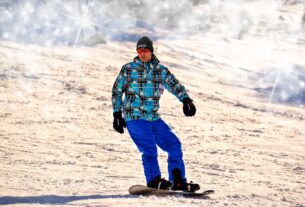
Sandboarding, sledding and even skiing are allowed anywhere on the dunefield away from plants. Here’s the catch: the National Park Service says snow sleds and skis only slide on very wet sand, after rain or snow. Most of the time the sand is dry, and you need a proper sandboard or sand sled.
- The park doesn’t rent gear. Shops in the San Luis Valley do, and some are open year-round, such as Kristi Mountain Sports in Alamosa and Sand Dunes Recreation near Hooper.
- The nearest small slopes are about 0.7 miles from the main Dunes Parking Area. The top of the first high ridge is about 1.25 miles away, and it’s a hard walk in loose sand.
- After a fresh snowfall, the dunes are at their most photogenic. Go early, before the wind and sun change the snow.
What’s different in winter
- Piñon Flats Campground is closed from November through March, and car camping isn’t allowed in the park in winter. A few campgrounds in the area are open all year.
- Backpacking on the dunes is allowed year-round, but expect snow and freezing nights.
- Medano Creek doesn’t flow by the main dunes in winter. In 2026 it was one of the driest years on record, so even the spring flow was minimal.
- Medano Pass Primitive Road (4WD only) is open from late spring to fall.
Winter tips
- Layer up. At 8,200 feet, winter mornings are often well below freezing, and the wind on the dunes is cold.
- Wear sunglasses and sunscreen. Snow and sand both reflect strong high-altitude sun.
- Check the weather and roads before driving over the passes into the San Luis Valley.
- Visitor center hours are short in winter, so plan to arrive in daylight.
Make it a trip: soak nearby
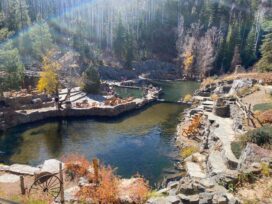
The San Luis Valley has some of Colorado’s most relaxing hot springs. Joyful Journey Hot Springs Spa in Moffat is a peaceful stop on the way. Read our Joyful Journey Hot Springs guide. For more winter ideas, see Colorado in winter.
FAQ
Is Great Sand Dunes open in winter?
Yes. The park is open 24 hours a day, year-round. The visitor center is open daily from 9 am to 4:30 pm, except Thanksgiving, Christmas and New Year’s Day.
Can you sled at Great Sand Dunes in the snow?
Yes, but snow sleds only slide well on very wet sand after rain or snow. Most of the time, you’ll need a sandboard or sand sled rented in the San Luis Valley.
How much does it cost to visit Great Sand Dunes?
$25 per vehicle for 7 days, or $15 per person on foot or by bike. An annual pass for the park is $45.
Can you camp at Great Sand Dunes in winter?
Piñon Flats Campground is closed from November to March, and car camping isn’t allowed in winter. Backpacking on the dunes is allowed year-round.
Does Medano Creek flow in winter?
No. In average years it only flows past the main dunes parking area for a few weeks in late spring.